re·store:to bring back into existence or use, reestablish; to put back in a former position; to make restitution of, give back.
hand·tool:a
device for performing work on a material or a physical system using
only hands; any number of nonmechanical implements used by craftsmen in
manual operations (e.g., chopping, chiseling, sawing, filing, or forging). A craftsman may also use instruments that facilitate accurate measurements (e.g., the rule, divider, or square).
Working with hand tools is an old and honorable craft. In the beginning,
it was necessary. Before the dawn of technology, it was the way
things got built. When times got tough, it became a way to acquire the
things you needed in a more affordable manner—by building them yourself.
At the beginning of the Industrial Age, hand tools were still used. But
as the years passed, they became less predominant, and technology and
convenience took over.
Although today you can undertake virtually any project with modern
electrical tools, there are still plenty of us who prefer to do it the
old-fashioned way. Hand tools are special to people for different
reasons. For some, it's the idea of getting back to basics. There's a
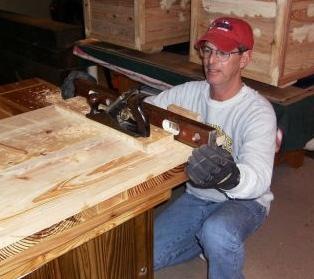
certain romance to building something with your hands, the feel of the
wood after running a hand plane over it.
For others, tools hold
sentimentality. Maybe it’s the hammer your father always reached for or
the ax you learned to chop wood with. Who doesn't remember building his
first school project in the garage with his dad or brother and
the feeling of accomplishment when it was complete?
Our affinity for hand tools includes all of the above. In 2001, we
noticed we had amassed a small collection of tools that seemed to have
been in the family forever. Some were Ron's, some were his father's. In an
effort to preserve and continue using them, we began experimenting with different restoration
techniques. There was
lots of trial and error, but we eventually succeeded. We had found our
passion.
Our first project came in the form of a bucket of old rusty tools from
my mother. They had belonged to her father. She knew about
our interest in refinishing and casually offered them to us. We
eventually cleaned and restored the items and gave them back to her
mounted in a presentation case as a Christmas gift. Her reaction was mediocre to say the least. We
were happy to learn that her lack of enthusiasm was because she
didn't recognize the tools as the ones she'd given us.
Over the next few years, our love of old tools grew—and so did our
curiosity. We became more interested in the history of the tools we
handled and how they had evolved. From there, we stumbled into antique
architecture. We've been fortunate to restore a few historical
pieces, with those being some of our favorite projects.
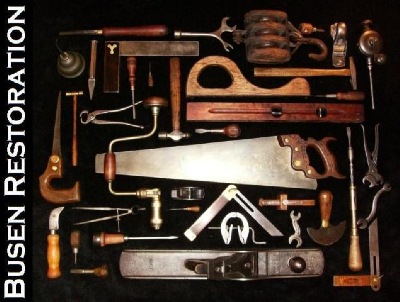
Since then, we've restored hundreds of tools—for friends, family,
and ourselves. Many times, the reaction is far beyond what we expect.
There’s something special about seeing a rusty tool that once sat in the basement
restored to the condition it was in when it was being used. The return of a
restored tool to its owner often elicits stories of the item,
memories, and sometimes tears.
When we learned that the gift of furniture has the same effect, we started building tables and trunks, always experimenting with new techniques. We don't claim to be experts, just lovers of history—and we've channeled that love into restoring all things old.
It's important to understand what we do. If you're looking to have an
item brought back to its original state, when it was brand new, you've
come to the wrong place. Our goal is to return the tool to the condition
it was in when it was being used regularly. That often means imperfections.
After all, it was new only once—when it was purchased. The first
day it was used, it began to develop its character, which comes in
many forms. It may be the dings in a screwdriver that got tossed around
constantly or the worn grip around the wooden handle of a hammer. We
preserve those aspects of the tool. For examples of the work we do,
click here.
* Ron Busen, the heart and talent behind this website, passed away in
January 2016. As such, we are no longer taking on projects. Similarly, the items on the Before & After pages are no longer for sale (despite prices listed). I hope you'll enjoy Ron's work, which was the original purpose of the Before & After tab as well as the entire site. If you have
a question or want to leave a
comment, you can email me at michelebusen@gmail.com. Thanks for visiting.













 re·store: to bring back into existence or use, reestablish; to put back in a former position; to make restitution of, give back.
 Working with hand tools is an old and honorable craft. In the beginning,
it was necessary. Before the dawn of technology, it was the way
things got built. When times got tough, it became a way to acquire the
things you needed in a more affordable manner—by building them yourself.
At the beginning of the Industrial Age, hand tools were still used. But
as the years passed, they became less predominant, and technology and
convenience took over.
Working with hand tools is an old and honorable craft. In the beginning,
it was necessary. Before the dawn of technology, it was the way
things got built. When times got tough, it became a way to acquire the
things you needed in a more affordable manner—by building them yourself.
At the beginning of the Industrial Age, hand tools were still used. But
as the years passed, they became less predominant, and technology and
convenience took over. 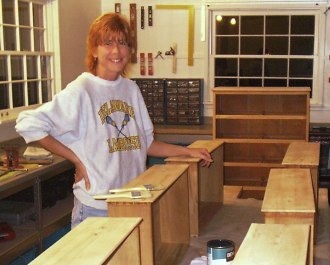 Our first project came in the form of a bucket of old rusty tools from
my mother. They had belonged to her father. She knew about
our interest in refinishing and casually offered them to us. We
eventually cleaned and restored the items and gave them back to her
mounted in a
Our first project came in the form of a bucket of old rusty tools from
my mother. They had belonged to her father. She knew about
our interest in refinishing and casually offered them to us. We
eventually cleaned and restored the items and gave them back to her
mounted in a 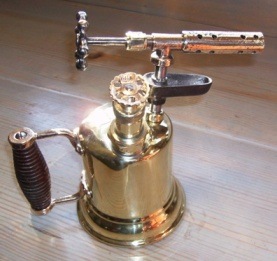 Since then, we've restored hundreds of tools—for friends, family,
and ourselves. Many times, the reaction is far beyond what we expect.
There’s something special about seeing a rusty tool that once sat in the basement
restored to the condition it was in when it was being used. The return of a
restored tool to its owner often elicits stories of the item,
memories, and sometimes tears.
Since then, we've restored hundreds of tools—for friends, family,
and ourselves. Many times, the reaction is far beyond what we expect.
There’s something special about seeing a rusty tool that once sat in the basement
restored to the condition it was in when it was being used. The return of a
restored tool to its owner often elicits stories of the item,
memories, and sometimes tears.